


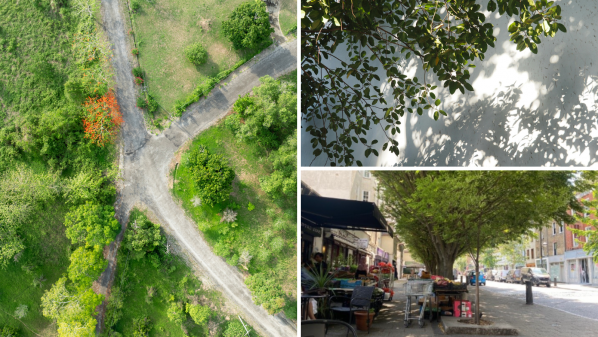
As autumn arrives, it can be tempting to put the record-breaking temperatures of summer 2026 behind us. But the extreme conditions offered a stark reminder that, as temperatures rise and heatwaves become more frequent, shade must become a key consideration in landscape design and an essential part of our green infrastructure.
Our Principal Landscape Architect, Fran Keith, explains why:
A Hot august day in London
The summer of 2026 saw record-breaking temperatures across the UK, with urban areas experiencing some of the most extreme conditions. During a visit to London in August, temperatures reached 34°C, even in the shade.
While this was challenging enough, the intensity of the heat radiating from buildings, pavements and hard-surfaced public spaces made conditions feel even more uncomfortable. Most striking was the number of people actively seeking out any available shade to escape the heat.
Although London is often described as one of the world's greenest cities, with nearly eight million trees and more than 35,000 parks and green spaces, the prolonged periods of hot, dry weather took their toll this summer. Large expanses of grassland within parks and public open spaces became scorched and dusty, while areas beneath tree and shrub canopies remained noticeably cooler and healthier.
As temperatures continue to rise and heatwaves become more frequent, shade must become a key consideration in landscape design.
The Urban Heat Island Effect
One of the main challenges facing towns and cities is the 'Urban Heat Island Effect.' This is where urban areas become significantly warmer than the surrounding countryside. Buildings, roads, paving, and other hard surfaces absorb and store heat during the day, releasing it slowly at night. As a result, temperatures remain elevated long after sunset, limiting opportunities for cooling.
Urban environments often lack the vegetation needed to counteract the urban heat island effect.
Trees and planted areas provide cooling through shade and evapotranspiration, yet many developments still prioritise hard surfaces over green infrastructure. Additionally, tall buildings and narrow streets can restrict airflow, trapping warm air and preventing heat from dispersing.
The result is an environment that becomes increasingly uncomfortable for residents and wildlife, particularly during periods of extreme heat.
This raises an important question: Are we designing our public spaces with enough shade to cope with future climate conditions?
Designing for Shade in Urban Areas
If this summer showed us anything, it's that shade is becoming essential infrastructure for adapting to rising temperatures. It's no longer an optional landscape feature.
Well-placed trees have an important role in combating increased sun exposure and temperatures, helping lower surface temperatures and create more comfortable, liveable spaces. Urban trees also improve air quality, reduce energy demand for cooling, intercept rainfall and provide valuable wildlife habitat.
Creating shaded routes through towns and cities can make walking and cycling more attractive whilst improving public health and wellbeing. Parks, school grounds, public squares, and residential developments should all incorporate planting schemes designed to provide long-term canopy cover.
A combination of trees, shrubs, pergolas, green roofs, and other green infrastructure can help create cooler and more resilient urban environments.
The Importance of Shade in Rural Landscapes
While much of the conversation focuses on towns and cities, shade is just as important in rural landscapes. We've seen the toll this year's heatwaves have taken on livestock, crops, water resources and wider biodiversity.
Trees planted alongside rivers, streams, ponds, and attenuation basins help cool water temperatures, protecting fish and other aquatic species during hot weather and periods of low flow. Riparian planting also helps stabilise banks, reduce erosion, and improve water quality.
Hedgerows, shelter belts, and woodland planting provide valuable shade and wind protection for livestock while helping to reduce soil erosion and moisture loss. They can also help protect crops from heat stress and reduce the risk of bolting in sensitive species.
Although trees can take a long time to mature, even young trees, shrubs, and hedgerows can begin to provide habitat benefits almost immediately.
Rural planting schemes support a wide range of wildlife, from birds and bats to pollinating insects, small mammals and countless soil organisms. Extensive root systems improve soil structure, increase infiltration, and contribute to healthier, more resilient landscapes.
Getting the Planting Right
Planting trees alone is not enough. The success of any landscape depends upon proper species selection, correct planting techniques, and long-term management.
Trees and shrubs must be matched to local soil conditions, climate, and available space. Equally important is ensuring that sufficient maintenance funding is available to support establishment, watering, pruning, and replacement where necessary.
Too often, planting is viewed as a one-off exercise rather than a long-term investment. However, healthy landscapes require ongoing care if they are to deliver their full environmental, social, and economic benefits.
Looking Ahead
As the impacts of climate change become increasingly apparent, shade can no longer be treated as an afterthought in landscape design.
Whether in cities, towns, villages, or the wider countryside, trees and vegetation play a vital role in reducing temperatures, improving biodiversity, protecting water resources, and creating healthier places for people and wildlife.
By investing in well-designed, properly managed green infrastructure today, we can create cooler, more resilient landscapes that are better equipped to cope with the challenges of tomorrow.